



Ever open a bag of fresh coffee, take a deep whiff, and get that perfect mix of chocolate and fruit? Then a week later you brew the same beans and they taste flat, dusty, and sad. Especially if you live somewhere hot and sticky.
Humidity and heat are coffee's worst enemies. They speed up oxidation, make beans sweat out their oils, and even grow mold. But you can fight back. In this guide, I'll walk you through six simple steps to store coffee in a tropical climate. You'll learn exact tricks used by coffee pros and get usable tips you can use today.
Let's start with the most important rule: your container.
Step 1: Choose an Airtight, Opaque Container
The first line of defense is a container that keeps air and moisture out. In a tropical climate, even a tiny gap lets humid air sneak in and ruin your beans. Air contains oxygen, and oxygen is what makes coffee go stale.
You want a container that seals tight. Look for a silicone gasket or a vacuum seal. Two popular options are the Fellow Atmos and the Airscape. The Fellow Atmos creates a vacuum when you twist the lid. The Airscape pushes air out as you press down the inner disk. Both do a great job. But you don't have to spend a lot. A simple mason jar with a rubber seal works too.
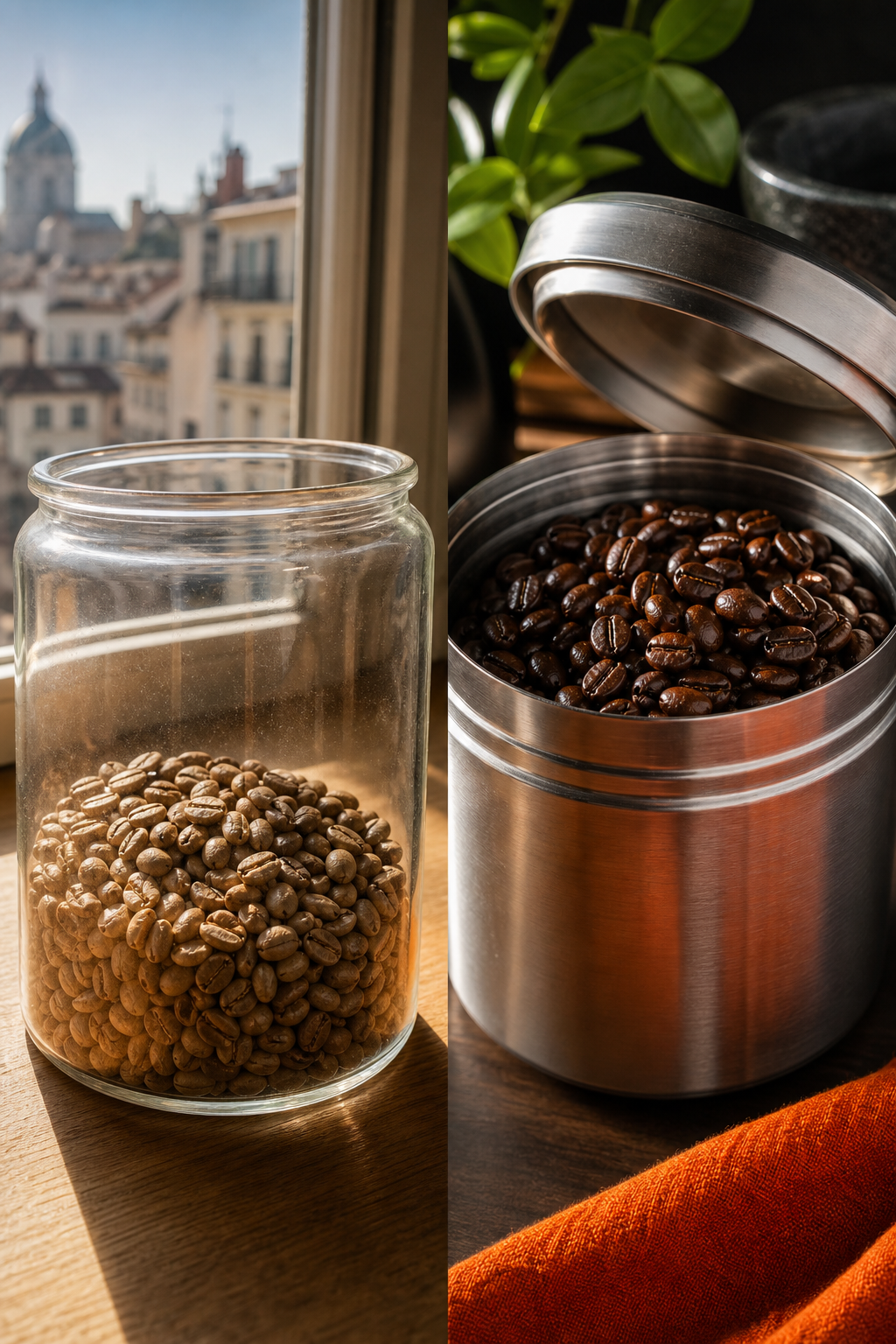
But here's something people forget: light is also a problem. Clear glass jars let sunlight in, which heats the beans and breaks down the oils. So choose an opaque container, or store clear jars in a dark cabinet. Stainless steel is perfect. It blocks light and is non-reactive.
Let's look at what the science says. According to a study published in the International Journal of Engineering Research & Technology, hermetic storage systems can reduce oxygen transmission to just 3 cc/m²/day. That's practically zero. The same study found that GrainPro bags (used for green coffee) have a water vapor permeability of 8 g/m²/day. That's a measurable barrier against humidity , something most home containers can't match.
This isn't just for farms. The principle works at home: the tighter the seal, the longer your coffee stays fresh. If you're serious about flavor, invest in a container that's both airtight and opaque.
So what should you actually buy? For most people, a stainless steel canister with a silicone seal and a one-way CO2 valve is ideal. The one-way valve lets carbon dioxide escape (fresh beans release CO2 for days after roasting) without letting oxygen in. That's important. If you seal beans too early before they degas, pressure builds up. A valve solves that.
Remember, even the best container won't help if you put it in the wrong place. That brings us to temperature.
Step 2: Maintain the Ideal Temperature
Heat speeds up chemical reactions. For coffee, that means faster staling. The ideal storage temperature is around 70°F (21°C). But in tropical climates, kitchens often hit 85°F or higher. That's a problem.
Every 10°F increase roughly doubles the rate of quality loss. So if your beans last two weeks at 70°F, they'll last only one week at 80°F. That's a massive difference.
Where should you store your coffee? The coolest spot in your kitchen is usually a pantry cupboard away from the stove, oven, and refrigerator vents. Avoid windowsills and countertops near appliances. If you have air conditioning, keep the container in a shaded part of the kitchen. No direct sunlight.
But what if your whole house is hot? Some people consider the refrigerator. I'll get to that in Step 5. For now, know this: if you can't keep your kitchen below 80°F, look into improving your home's insulation. Proper windows and doors help maintain a stable indoor temperature. That's worth it for your coffee and your electric bill. Window & Door Contractors in Prescott, AZ can give you ideas on sealing drafts and upgrading your home.
Another trick: buy smaller batches. Instead of one big bag, buy a week's worth. That way you finish it before heat takes its toll. Many coffee roasters offer subscription services that deliver fresh beans every week or two. Florida Keys Coffee Flavor Profile: A Tasting Guide includes tips on buying small batches and using beans within two weeks for best flavor.
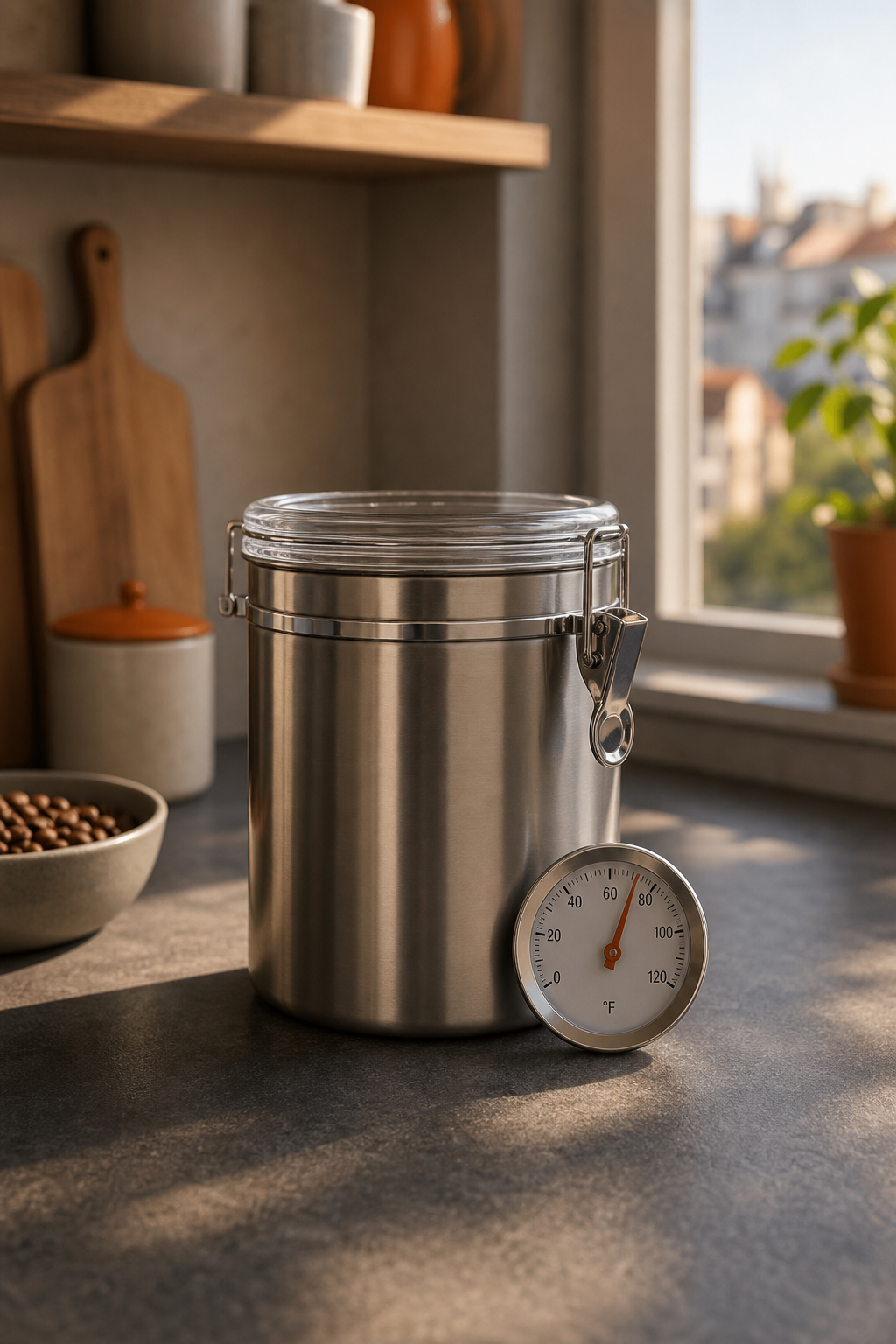
If you want to get technical, you can use a digital thermometer to check your pantry. You might be surprised how hot it gets. Even a few degrees cooler makes a difference.
Step 3: Control Humidity to Prevent Mold
Humidity is the silent killer. In tropical climates, relative humidity often sits above 70%. Coffee beans are hygroscopic , they absorb moisture from the air. Too much moisture leads to mold, musty flavors, and even dangerous mycotoxins like ochratoxin A.
According to Wikipedia's article on relative humidity, mold growth typically requires humidity above 60%. That's common in tropical regions. So you need to keep your coffee environment drier than that.
How do you do it? First, your container must be watertight. But even inside an airtight container, trapped air still contains moisture. That's where desiccants come in. Silica gel packets absorb excess moisture. You can buy food-grade desiccant packs and toss one into your coffee canister. Replace it every month.
Another option is a humidity control packet, like those made for camera gear or cigars. They maintain a specific relative humidity inside the container. For coffee, aim for around 50% RH. That's low enough to prevent mold but not so dry that beans lose oils too fast.
What if your whole kitchen is humid? A dehumidifier in the room helps. But that's a big investment. A simpler fix is to store coffee in a cabinet with a small container of uncooked rice or silica cat litter to absorb ambient moisture. Just keep it away from the coffee itself.
The research from the coffee industry is clear: at the professional level, storage facilities use dehumidifiers to maintain moisture content below 7%. That's the safe zone. At home, you can achieve similar protection with a good container and a desiccant pack.
One more tip: never open your coffee container in a steamy kitchen right after cooking. The extra moisture in the air rushes in. Wait until the steam clears.
"In tropical conditions, every gram of moisture can spell disaster , only high-tech barrier bags actually quantify humidity protection." , Research context
Step 4: Shield Coffee from Light and Oxygen
You've already got an airtight container. But even with a seal, every time you open the lid, fresh oxygen gets in. And light , especially sunlight , degrades coffee oils quickly.
Oxygen is the real villain. The staling process is driven by oxidation. The more oxygen your coffee is exposed to, the faster it loses flavor. That's why vacuum canisters and displacement systems work. They minimize the air left inside.
Let's talk about the role of CO2. Freshly roasted beans release carbon dioxide for days. That CO2 forms a protective blanket that pushes oxygen away from the bean surface. But once the CO2 dissipates, oxygen takes over. That's why you want a one-way valve on your container , it lets CO2 out but doesn't let oxygen in.
Light works two ways. First, it heats up the container, raising internal temperature. Second, ultraviolet rays directly break down the organic compounds in coffee. That produces off-flavors. Opaque containers solve this. If you use glass, keep it in a dark cabinet.
A study from Cooper's Coffee Co. explains that grinding coffee exposes thousands of times more surface area to oxygen. That means ground coffee stales much faster. So never store ground coffee in a clear jar on the counter. Use an airtight, opaque container and grind fresh when you brew.
What about vacuum sealers? You can buy a dedicated coffee vacuum sealer that removes all air from a special bag. This is great for long-term storage in the freezer. But for daily use, a twist-seal container works fine.
Step 5: Decide on Refrigeration or Freezing
This is the most debated topic in coffee storage. Should you put coffee in the fridge or freezer in a tropical climate? The short answer: only if you do it correctly.
The problem with refrigeration is condensation. When you take a cold jar out into a humid kitchen, water vapor condenses on the beans. That's like adding a drop of water to your coffee. It can ruin the flavor and promote mold. Plus, fridge air is full of food odors , your coffee will smell like last week's leftovers.
Freezing is a better option, but only for long-term storage. If you buy a month's supply, you can freeze most of it in airtight, portion-sized containers. Each container should be as full as possible to minimize air. Then, when you need coffee, take one container out, let it come to room temperature before opening (to avoid condensation), and use it within a week.
Some coffee pros argue that freezing changes the bean's cell structure. But the difference is minimal if you freeze quickly and thaw slowly. In tropical climates where room temperature is high, freezing might be the only way to keep beans fresh beyond two weeks.
One reader on a coffee blog said: "In my climate where it's extremely hot and humid all the time, the freezer is the only way to keep my expensive coffee fresh." That's a real trade-off.
If you decide to freeze, follow these rules:
- Use freezer-safe, airtight containers (vacuum-sealed bags are best).
- Divide into single-week portions to avoid refreezing.
- Label with the date.
- Thaw in the sealed container to room temperature for 2-3 hours before opening.
Think of it like securing valuables , you need a reliable method. Just as you'd store a handgun in a climate-controlled safe, your coffee needs protection from humidity and temperature swings. A handgun safe is designed for secure storage, and while your coffee container doesn't need a lock, it does need a tight seal and stable environment.
For daily use, skip the fridge. Keep your main supply at room temperature in an opaque, airtight container. Freeze only backup portions.
Step 6: Match Storage to Coffee Form (Beans, Ground, Pods)
Different forms of coffee have different storage needs. Let's break it down.
Whole Beans: These are the most forgiving. The oils and flavor compounds are protected inside the bean. With proper storage (airtight, opaque, cool, dry), beans stay fresh for 2-4 weeks after roasting. That's the sweet spot. After that, flavor declines.
Ground Coffee: Ground coffee stales much faster because more surface area is exposed to oxygen. In a tropical climate, ground coffee can go flat in less than a week. That's why I always recommend grinding fresh. But if you must buy pre-ground, buy small amounts and use them within a week. Store in a vacuum canister if possible. Consider buying from a roaster that ships freshly ground and uses one-way valve bags.
Coffee Pods (e.g., Nespresso-compatible): Pods are individually sealed, so they last longer , up to a year if stored properly. But in tropical climates, heat can still degrade the grounds inside the pod. Keep pods in a cool, dry place away from direct sunlight. The original packaging provides good protection. Don't transfer them to a different container unless it's airtight. Chilled Iguana Coffee Co.'s single-serve pods are nitrogen-flushed to lock in freshness. Our 12-pack pods are sealed with no oxygen inside, so they stay fresh even in warm weather.
Instant Coffee: Instant coffee has a long shelf life because it's already dehydrated. But it's also sensitive to moisture. Keep it in its original jar with a tight lid. If the jar isn't airtight, transfer it to a small canister. Instant coffee can last for years when stored properly.
Here's a quick comparison table:
No matter which form you use, the principles are the same: minimize air, keep cool, out of light, and dry. Store different forms separately to avoid flavor cross-contamination.
Conclusion
Living in a tropical climate doesn't mean you have to drink stale coffee. With a few smart changes, you can enjoy fresh, flavorful coffee every morning. Let's recap the key steps.
Start with an airtight, opaque container. Stainless steel is best. Add a one-way valve if you can. Store it in the coolest, darkest part of your kitchen , away from the stove and windows. Control humidity with a desiccant pack if needed. If you freeze coffee, do it right: portion airtight, thaw slowly. And match your storage method to the form of coffee you're using.
The investment is small. A good canister costs $20 to $40, and desiccant packs are cheap. But the payoff is huge: every cup tastes like the roaster intended , bright, complex, and delicious.
Ready to upgrade your coffee game? Try our Chilled Iguana Coffee Co. subscription for fresh roasted beans delivered right to your door. We roast in small batches and ship fast, so you get optimal freshness even in warm weather. Plus, our Florida Keys-inspired blends are perfect for tropical living.
FAQ
Can I store coffee in the refrigerator in a tropical climate?
Generally no. The fridge causes condensation every time you take it out, adding moisture to the beans. It also exposes coffee to food odors. If you have no other cool spot, freeze instead , but only if you follow proper freeze-thaw techniques to avoid moisture buildup.
How long does coffee last in a tropical climate?
Whole beans stored in an airtight container at room temperature stay fresh for 2-4 weeks after roasting. Ground coffee lasts only 3-7 days. Higher temperatures and humidity shorten that window. Freezing can extend freshness for months if done correctly.
What is the best container for coffee in humid weather?
Stainless steel canisters with a silicone gasket and one-way CO2 valve are ideal. Brands like Airscape and Fellow Atmos are popular. They block light, seal tight, and allow beans to degas without letting oxygen in. For budget options, use a mason jar with a rubber seal stored in a dark cabinet.
Should I use silica gel packs with my coffee?
Yes, if you live in very humid conditions. Food-grade silica gel packets absorb excess moisture inside the container. Replace them monthly. They help prevent mold and keep beans from becoming sticky or stale.
Does freezing coffee affect the taste?
If done properly, the taste difference is minimal. Freeze beans in airtight, portion-sized containers. Thaw to room temperature in the sealed container before opening. Avoid refreezing. This method works well for bulk coffee in tropical climates where room temperature storage is too warm.
Can I store different coffee forms together?
It's not recommended. Whole beans, ground coffee, and pods have different storage needs and aromas. Keep them separate to prevent flavor mixing and to tailor storage to each form's requirements.
How do I know if my coffee has gone bad?
Smell it first. Stale coffee smells flat, dusty, or like cardboard. Fresh coffee smells vibrant and aromatic. Also check for signs of mold (white or fuzzy spots) or an oily, rancid sheen. If in doubt, toss it and buy a fresh batch.
What is the best way to store green (unroasted) beans?
Green beans last much longer , up to a year if kept cool, dry, and away from light. Store them in a breathable container like a burlap sack or paper bag, not airtight, to prevent moisture buildup. Keep humidity below 60% and temperature under 70°F for optimal longevity.